
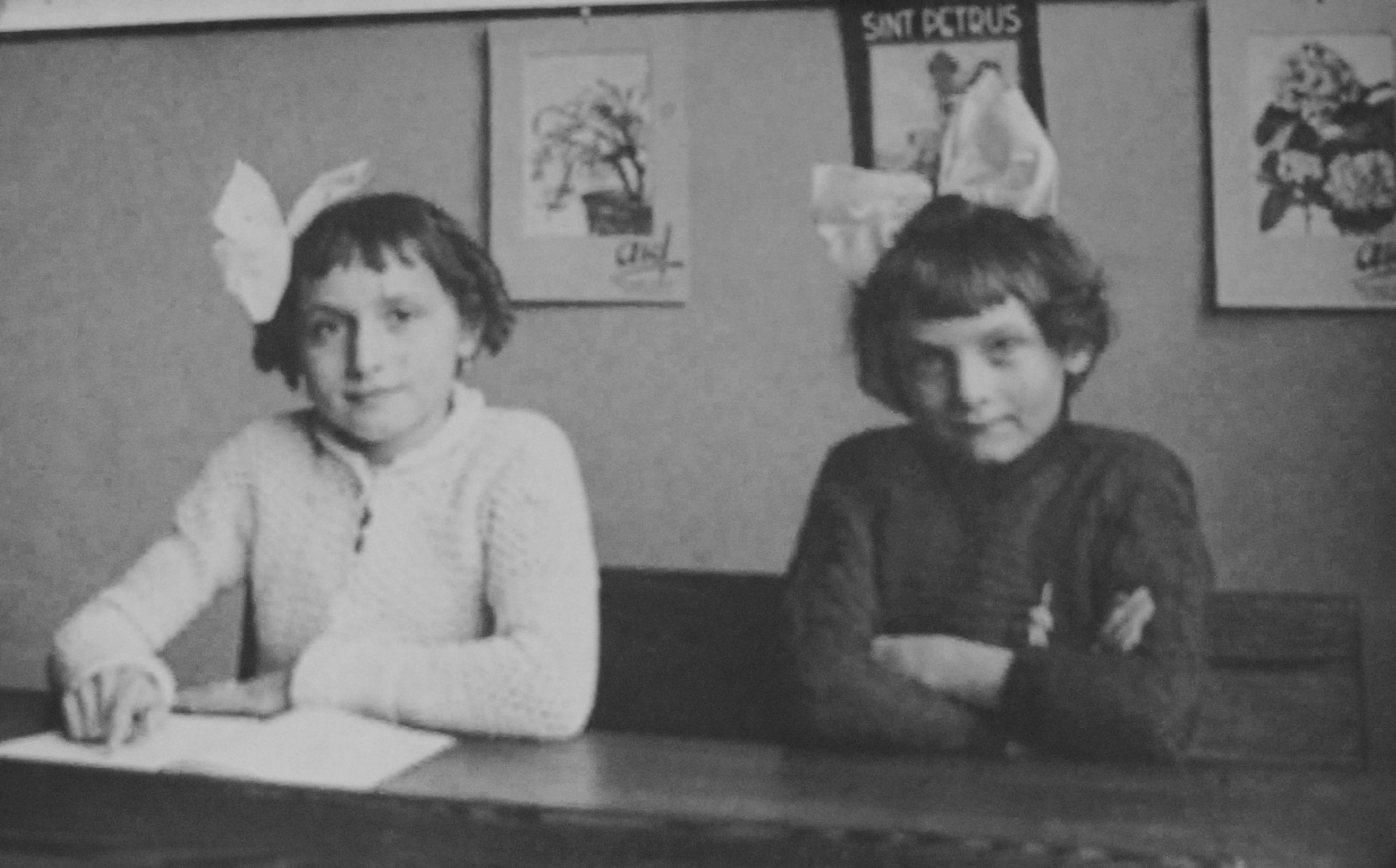
Rotterdam, the Netherlands. Early 1940s.
Young Dutch girl Eva de Konning sets off from her home in the east of the Nazi occupied city and skips over the railway lines towards a road block.
“Goedemorgen,” she says cheerfully to the German soldiers standing guard.
They return her greeting, and wave her through. Eva, who is only six or seven years old, regularly makes the short journey to visit Chris, a barber, so is well known to the soldiers.
“Come and sit down Eva,” says Chris when she arrives at his shop. “You must be hot. Here take off your coat.”
She removes the coat, which is fashioned from a blanket and hands it to Chris. He gives her a drink of lemonade and some chewing gum.
A while later he returns with the coat. She puts it on and walks home, back through the German road block.
This routine continues for two or three years. Eva never challenges her father when he tells her it is time to go and visit Chris. He is a strict disciplinarian so she knows to follow his instructions without question. And there is always the sweetener of a lolly or glass of lemonade to make the journey worthwhile.
It is not until the end of the War that Eva discovers just how dangerous those barbershop visits really were.
***
Eva Mulken sits at the dining table at her Christchurch home, looking over a handful of black and white photographs from the war years in Rotterdam.
For nearly 70 years she has told her extraordinary story to family and friends but it has never been recorded.
It was 14 May 1940, when her home city was torn apart by the Rotterdam Blitz – a key part in the German invasion of the Netherlands. Relentless bombing destroyed most of the city’s heart which led to the Dutch surrender to the Nazis a few days later after Utrecht was threatened with the same treatment.
Until the war, Eva and her family had led a privileged life.
“We were well off and brought up with class distinction, which I didn’t really like,” she says.
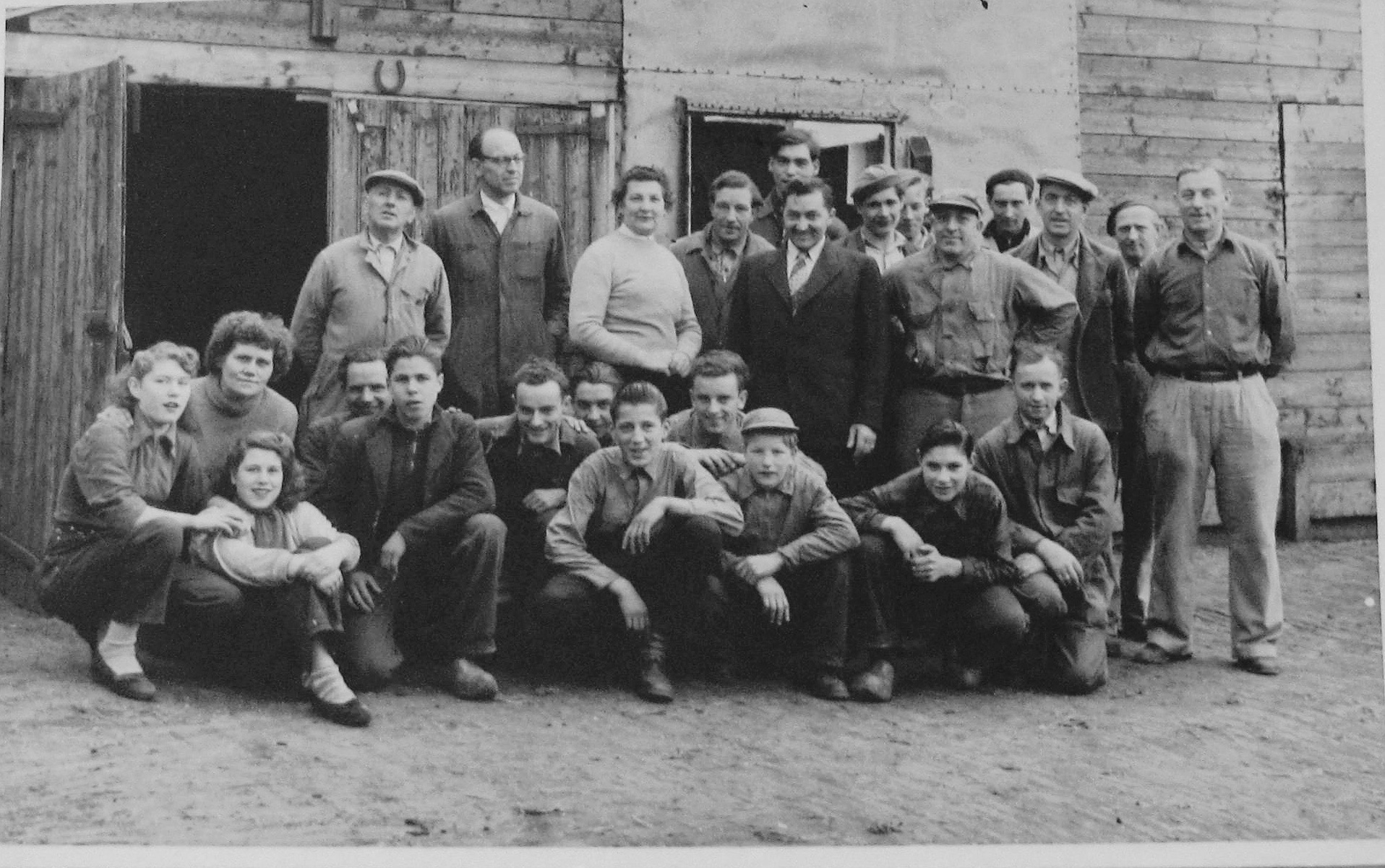
Her father Dirk de Konning was a well respected farmer and businessman. He had a large property on the outskirts of the city, and travelled all over Europe buying and selling cattle. The farm employed numerous workers, who harvested milk, made gouda cheese, ran stock and grew crops.
After the invasion the property was commandeered by the Germans for use as a heavy artillery base given its strategic location near the dyke with the main railway lines to Utrecht and the city, and goods train lines crossing its boundary.
The soldiers also took over most of the family’s stables for their own horses and made good use of the farm’s ready supply of food.
Rotterdam was split into north, south, east and west areas under its occupation, which were separated by road blocks.
“The adults would have to show their passports to the soldiers at these road blocks, but us kids usually went straight through. We knew most of the German guards because they were living on our land,” says Eva.
What she didn’t know at the time, was that her father was one of the men leading the local underground resistance network, often helping to save the lives of British and American pilots who had been shot down, she says.
“The big Lancaster bombers used to fly over on their way to Germany but sometimes they’d be shot down by heavy artillery on the land. If the pilots were still alive my father would help them and try and get them back to England.”
The underground would smuggle the pilots out of Rotterdam, through Schiedam and out to Maasslius, where they would be picked up by fishing boats that would take them back to England.
The courageous men and women of the resistance would also alert the British to the location of war factories in Germany where thousands of young Dutch men had been forcibly requisitioned to make everything from uniforms to munitions and aircraft.
These factories were prime bombing targets for the RAF, so the Dutch underground did their best to try and ensure the British avoided the ones where the Dutch men worked.
“We were lucky as although we had heavy artillery on my father’s land, the British were not allowed to bomb it because it had to be saved for the underground.”
Dirk de Konning had a transmitter that he would bravely use to send and receive coded messages to and from England, right under the noses of the Germans living on his property.
Towards the end of the war, he would sneak out at night, past the heavy artillery, and wade through water to a far corner of his farm, where he would signal British planes by torchlight so they could safely drop guns for the Dutch underground.
“My father had so many guns arrive on his land. By the end of the War virtually every member of the underground had one. He had to be so careful.”
It was this dangerous work that led to Eva’s regular visits to Chris, the barber.
“Important messages from England about the pilots or potential bombing targets had to be passed to other members of the underground which was a big organisation, spread right across Rotterdam. After the road blocks went up it was very hard to get messages to the other side and although we had a telephone we couldn’t use it because the Germans were so close.”
Eva’s father used to sew hand-written notes into the bottom hem of her jacket, which Chris would remove and replace with another message.
“I had no idea until after the War that I was working for the underground. It was incredibly dangerous. If my father or I had been caught they might have shot the whole family.”
There were six children in Eva’s family but she got the job as message deliverer because she was the youngest and the fastest runner, she says.
“My father used to say, ‘Eva, go to the road blocks. Don’t stop. Don’t talk. Just go to Chris. He is waiting for you and has a lolly.’ My father said after the war he couldn’t have told me what I was really doing because kids talk, but that I was a very brave girl. Even my mother, Christine, didn’t know the truth.”
Eva’s eldest brother Adrie also worked for the underground. But he wasn’t able to avoid capture.
“He was shipped off to a camp in Holland in 1943. It was two years before we discovered his fate.”
***
Dirk de Konning used to pull on a balaclava and gloves and disguise his voice when he attended meetings of the local underground.
He was so secretive about his involvement in the group that his wife Christine was completely unaware of his activities.
“People had to be careful not to reveal their faces as someone sitting next to them could be a traitor. That’s how my brother Adrie got caught.”
Adrie was sent to a camp in Holland by the Germans before being moved on to a small concentration camp in Germany in 1943.
Despite his son being captured, Dirk’s work with the underground continued uninterrupted.
“He was determined to do every little thing he could to help.”
The family was desperate for news of Adrie but months went by without any word.
Eva says being a “very Catholic family”, her mother used to get feelings about things, and she will never forget the vision of her coming down the stairs early on the morning of 5 April 1944 with tears streaming down her face.
“I will always remember the exact date. My mother cried, and cried and cried. I said, ‘what happened?’. She said ‘It’s terrible Eva, Adrie is dead. They took his fingernails, his teeth and they hit him and hit him to death. I was there and saw it all.”
Eva’s mother asked her to pray so they clasped hands and knelt down.
When her father came in from milking the cows he asked what was going on.
“My mother said, Dirk, it’s terrible, Adrie is dead. He’s lying there dead’. My father told her she must have been having a bad dream but she insisted she had seen it all. I was the only one who believed her.”
Many more months past. The war eventually came to an end and Rotterdam was finally liberated.
One Sunday lunchtime soon after, Eva and her friend Riet were standing on the dyke watching the rail cars filled with Dutch men coming back from Germany.
“We were waving and singing and so happy, when all of a sudden Riet yelled, ‘Eva, it’s your brother, it’s Adrie!’ I couldn’t believe it. He was alive. The rail car was due to stop at another station about five minutes further on so it was just as well I was a fast runner. We ran and ran to the station and found Adrie. It was incredible to see him. I said ‘you are supposed to be dead’, and he said, ‘Eva it’s a long story’.”
The girls walked home with Adrie and found her father milking the cows.
“I said father, come, Adrie is here. A lot of the farm workers were with him. Nobody could believe it.”
Eva’s father asked her to go and collect her mother from her Aunty Jul’s house, a half hour walk away.
“My mother had a bad heart, so my father said to be careful how I told her that her son was still alive. I ran to my aunt’s house and told my mother she had to come home. As we started to walk, I said, Mother do you remember the dream where you said Adrie was dead? Well whatever you saw he is not dead. He’s at home and he’s alive.”
When they got home Eva’s mother was overcome with emotion, held Adrie tight and wouldn’t let him go.
Eva says the “most beautiful thing” about the story was when her mother told Adrie about her terrible vision of what he had endured.
“My brother said everything she saw was true and that he had come very close to losing his life after being badly tortured and left for dead by the Gestapo and SS soldiers at the concentration camp.”
But despite the cruel torture inflicted on him, Adrie still refused to talk.
At the end of the beating the Germans threw him outside among some other bodies, thinking he was dead. A German farmer, who was at the camp to pick up scraps for his pigs saw that Adrie was still breathing and managed to sneak him onto his truck and take him home.
The kindly farmer and his wife made a bed for him in a farm shed among the animals as they were too frightened to have him in the house.
“The wife started giving my brother boiled potato water and rice water, because he was almost starved to death and couldn’t tolerate food. He was also covered in bruises and sores but she did whatever she could to keep him alive. Finally Adrie grew stronger and was able to start eating again. Then the end of the war came and he was able to come home.”
Eva says the couple who saved him were “highly decorated” after the war for their bravery and kindness.
“It was such a big risk as they would have been shot if they’d been found out.
Adrie worked for his father’s business after the war and went on to marry and have three children.
He wrote a book about his wartime experiences.
“His health wasn’t 100 percent for the rest of his life. He always had high blood pressure and died of cancer at the age of 71.”
***
The de Konnings were a family of means and strong followers of the Catholic faith. In desperate times during the war, they were happy to share what they had with others.
When Rotterdam was bombed in 1940, nearly 900 civilians were killed, including the parents of three young children.
“We went to church a week or so after the bombing and when we came out the Red Cross had several orphaned children they were trying to find temporary homes for until other family members could be found. We saw three young children who had been found huddled together in a bedroom of their bombed house. My mother looked at my father and he agreed to take them home.”
It was a few months before the children’s Oma was located. However she said she couldn’t take the siblings because she couldn’t afford to feed them.
“There was very little food back then but we had enough on the farm so my mother ended up looking after them for a few years. After the war they found homes with some other relations.”
The de Konnings took in an additional two children, as well as a couple of elderly local men who did odd jobs on the farm in return for shelter and food. Another couple of their farm workers used to eat dinner with the family at a table stretching the length of the room to accommodate everyone, says Eva.
“We had two coal ranges going all the time and pots this high,” she says, raising her arm to table height. “My father also tried to look after the priest and 40 nuns at the parish, killing a cow or pig from the farm on the quiet to feed them.”
She says things got “really bad” in 1944 and 1945 when Europe had its worst winter for years and German blockades cut off food and fuel shipments which led to the Dutch famine known as the Hongerwinter (Hunger winter).
By then southern Netherlands had been liberated by the Americans but it would be another few months before the Canadians would sweep into the northern and western parts of the country, including Rotterdam.
“There was no food, and people were desperately hungry. The Scandinavian countries used to drop biscuits off to us from the air and send free bread that we had to queue for at the shop and show our passports to receive,” says Eva.
Around 4.5 million Dutch people were affected, with soup kitchens playing a big part in their survival. However thousands of people still died from malnutrition.
***
Eva says her family saw the best and worst side of the German soldiers during their wartime experiences.
“We adjusted well to having the German soldiers on our farm. They were good men, ordinary Germans who like so many soldiers on both sides, never wanted to go to war.”
She looks at a photo of her, her sister and father with the German soldiers on the farm.
“It’s still one of my favourites,” she says.
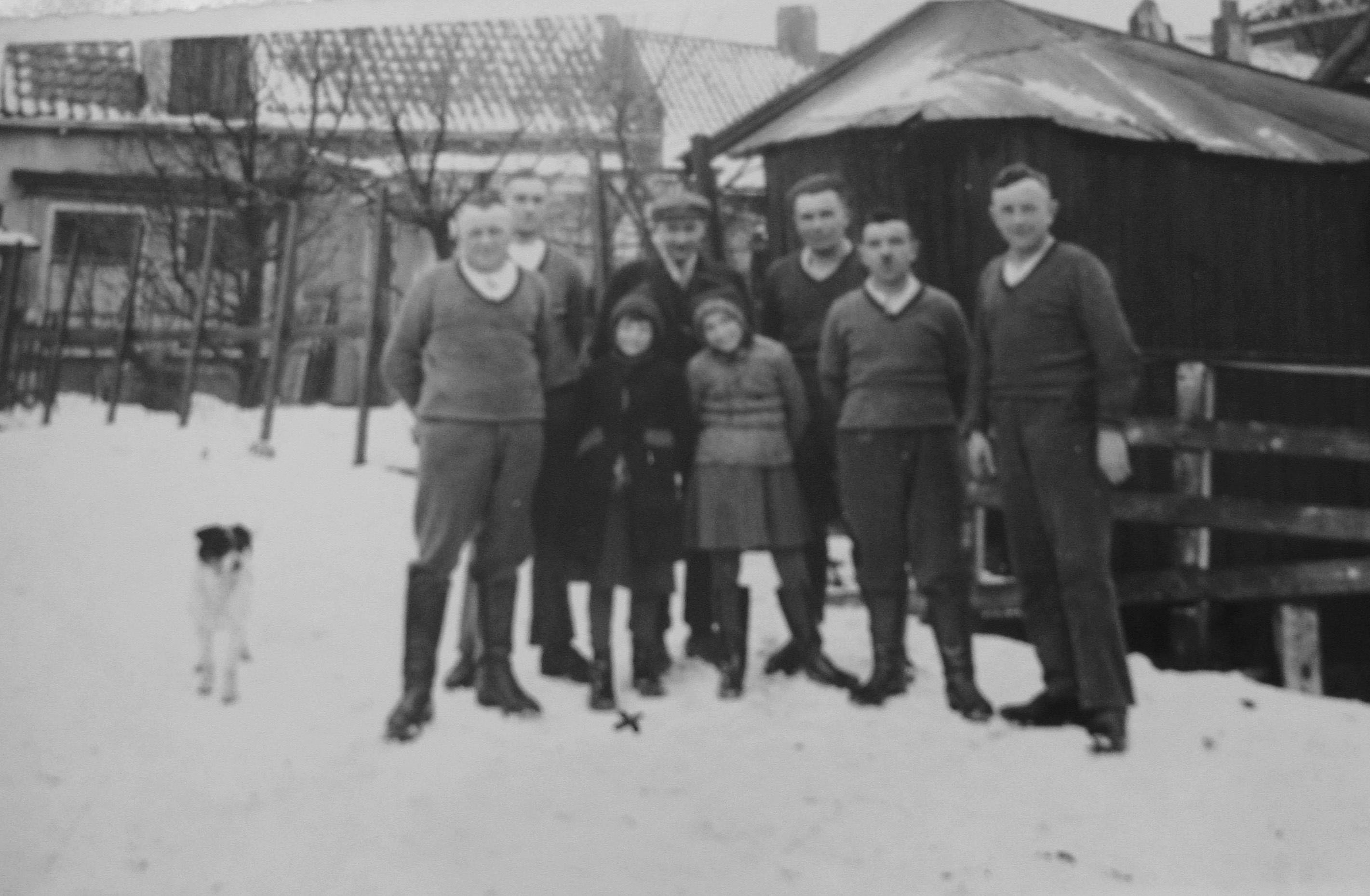
Eva was particularly fond of one of the soldiers named Oscar, a father of four from a town near Heidelberg.
“He favoured me so much because he had a daughter my age. He was a good man. My mother and I even wrote regularly to his mother back in Germany.”
Eva also carries images with her from the War that no small child should have had to see.
She witnessed Dutch Jews being “rounded up like mobs of sheep” and herded onto railway cattle wagons, on their way to the concentration camps.
One day in 1940 she and her parents came across a Dutch soldier, badly wounded by a grenade.
“They bandaged him as best they could and when my father was getting the horses ready to take him to the nearby hospital said I had to hold my hands tightly over the wound. My mother prayed over him with her rosary beads and the soldier said ‘Is there a God?’ ‘Of course,’ said my mother, you must believe.’ The soldier said if he was still alive a year later he would become a Catholic. We got him to hospital and he survived. True to his word a year later he visited my mother and asked her how to convert.”
Towards the end of the War, the Germans took several retaliation measures against the Dutch people for acts of resistance, particularly after Dolle Dinsdag, or ‘Mad Tuesday’, the day after the Allies had conquered Antwerp, when rumours started to spread about the imminent liberation of the Netherlands. Many Dutch people prepared to receive and cheer the Allies, and although southern Netherlands was liberated soon after, it wasn’t until 5 May 1945 that the whole of the Netherlands was finally free.
Soon after Dolle Dinsdag, many people were executed throughout Holland by firing squad for acts of resistance.
Eva was horrified to witness a dark day in Rotterdam’s history on 3 April 1945 at Oostzeedijk when 20 men were brought before a firing squad on the side of the dyke at eight o’clock in the morning.
They were shot in retaliation for the killing of a policeman from Rotterdam who was also a member of the SS.
“We were on our way to church and as we came up the steps of the dyke could see a lot of people standing around. There was a big truck with a canvas back, and 20 men lined up alongside the dyke. We had to stand there and watch and couldn’t say anything. Then some soldiers, either SS or NSB, came out and shot the men. I couldn’t believe what had happened. It was terrible.”
Like many of the German soldiers stationed at the de Konning’s farm, Oscar, Eva’s friend, was later sent on to the Russian Front.
“He didn’t come back. None of them did.”
The German armed forces suffered 80 percent of its military deaths in the Eastern Front, still generally accepted as the deadliest conflict in human history. This period of the War was highlighted by brutal warfare and an often willful disregard for human life by both sides in order to achieve victory.
It was these battles with the Red Army during the harshest of winters that ultimately led to the German’s defeat.
Eva remembers lots of Canadian, British and American soldiers in Rotterdam after the hostilities ceased.
“The tanks rolled into Rotterdam and five minutes later we were on top of them. It was wonderful.”
***
When she was just 14 years old, Eva met Johannes Mulken, the man who would become her husband.
“The very first day we met he asked me to marry him. I looked at him and said yes.”
Eva’s parents were not impressed. Her father already had a local boy lined up for her to marry, the son of a businessman, who owned a distillery. Johannes (John) came from a poorer family.
“I got my way in the end and married John when I was 18. On the day of the wedding my mother said, ‘I know there’s a reason for you getting married so young but I just can’t see it ’. Two years later she was dead at the age of 54 following a heart attack. I cried for two solid years but at least I was in my place with a lovely husband. That was the reason.”
Eva says she learned the “important things in life” from her mother.
“We were always taught to help people, especially during the war when we were giving people food and had all these extra people living in the house. She used to say giving is much better than taking, and that love was the most important thing. I was lucky to find love when I was very young. And the day I married the man I loved I became a free woman.”
John served in the Dutch navy and was sent to fight in the Indonesian War of Independence.
“I was hoping he would come home and was lucky he did as a lot of his friends didn’t make it,” she says.
In the 1950s, with work becoming scarce in Holland, Eva and John decided to move out to New Zealand.
“I was in my early twenties by this stage with two children. When we came to New Zealand we never looked over our shoulders. We gave it two years and thought if we didn’t like if after then we’d move back home. But we loved it here.”
The couple settled in Greymouth where John worked on the railway for two years.
However business ran in Eva’s blood, and she was determined the couple could do something for themselves.
”We borrowed some money from the bank, moved to Christchurch and started a cafe called the Blue Mill Milk Bar in Sydenham.”
It wasn’t long before the couple was opening the cafe seven days a week, starting at 6am every day.
“We were the first people in Christchurch to sell coffee. We brought percolators out from Holland. All the carriers in Christchurch used to come into the nice warm shop for a coffee and some good food.”
Soon they were selling chocolates, books and newspapers from the shop too.
“It was a success but we didn’t lose sight of the things we’d learned during the Wars. When my husband was in Indonesia he never forgot how the Salvation Army used to give the soldiers parcels and magazines. He insisted that when Salvation Army members in Christchurch would come into the milk bar on Friday afternoons they wouldn’t pay for their tea. Sometimes we’d be making free tea for 10, 12 or 14 people but it didn’t matter.”
The Mulkens were repaid one Christmastime by one of “most beautiful things” Eva has seen.
“One Friday afternoon before Christmas the entire Salvation Army Band came to play in front of our shop to say thank you. The business people next door were saying, ‘what have you got that we haven’t’. We said, love in life and helping people, the most important things.”
Eva was devastated to lose her husband John to cancer 20 years ago, but her drive to help others has continued on.
***
As we chat, Eva’s passion and zest for life is evident despite living through some of the most difficult circumstances in the twentieth century and bearing witness to terrible atrocities.
She chats freely and laughs long and is philosophical about the lessons her family and experiences taught her.
One thing she can’t quite believe is the unbelievable coincidence of seeing her two home cities destroyed.
“All those years ago when I was a small child I saw Rotterdam razed to the ground and rebuilt. Now the same thing is happening in Christchurch. Who would have thought you’d experience something like that twice in a lifetime?”
